Duvet Tog/Buying Guide

Duvet Tog/Buying Guide

Quick answer: for summer, choose a duvet rated 4.5 to 7.5 tog. For winter, pick 12 to 13.5 tog or higher. Spring and autumn sit comfortably in the middle, at around 9 to 10.5 tog. If you'd rather not own three different duvets, an all-season (3-in-1) duvet lets you combine ratings to suit the time of year.

That's the short version. Picking a new duvet doesn't have to be daunting, but it does involve a few decisions beyond tog rating alone. Some of us like a duvet that gently curtains over the body, while others prefer a heavier duvet that creates more of a cocoon-like, enveloping feeling. Both effects can be achieved with natural and synthetic duvets, but allergies and your natural body temperature also need to be considered when buying the perfect duvet. Below, we'll cover tog rating in full, plus filling type, sleeper type, and the questions we're asked most often.

What does tog actually mean?

Duvet

Tog is frequently mistaken for weight. A high tog does not necessarily mean that the duvet is heavy, it simply means it will be more thermally efficient and keep your body at a warmer temperature. Tog ratings range from 1 to 15, and the right one for you depends on a combination of season, personal preference, and the age of the person using the duvet.

Duvet tog rating by season

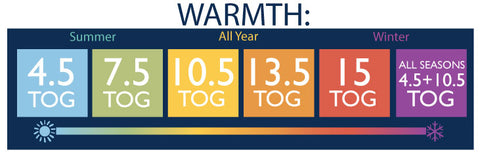
Here's the breakdown most people are looking for when they search for a season-by-season guide

Tog rating guide

Duvet tog ratings range from 1 tog to 15 tog. The tog you need will depend on a range of factors such as season, preference, and the age of the person using the duvet.

An adult will choose a tog rating based on personal choice and preference however younger children require specialised children's bedding with specific tog ratings depending on their age.

Summer duvets: what tog should you go for?

Low togs like 4.5 and 7.5 are ideal for summer, or for those who have naturally warmer body temperatures. If your bedroom regularly sits above 21°C overnight, stick to the lower end of that range.

Winter duvets: what tog should you have?

An extra-warm tog such as 13.5 or 15 is intended for winter use, or for those who tend to feel the cold more than most. If your bedroom is poorly insulated or doesn't have overnight heating, the higher end of this range is worth considering.

Spring and autumn: the in-between seasons

10.5 tog is a good all-season duvet if you want to use the same duvet all year round, and it's the most popular choice for spring and autumn specifically. If you only want to own one duvet, this is usually the rating to pick.

All-season duvets explained

If switching duvets twice a year isn't practical, an all-season (sometimes called 3-in-1 or combination) duvet is worth considering. These typically come as two duvets, often a 4.5 tog and a 9 tog, that pop-fasten together to create a 13.5 tog duvet for winter. Unfasten them, and you can use either duvet alone, or both layered separately on particularly cold nights. The main trade-off is cost and bulk, since you're effectively buying two duvets, but it removes the need to keep switching.

Filling - Natural or Synthetic?

Synthetic

Duvet

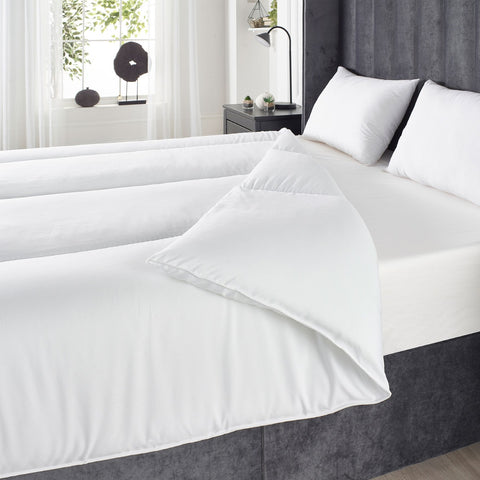
If you are prone to allergies, synthetic fillings should be your preferred option and natural feather fillings avoided. Man-made fillings such as hollowfibre and microfibre are non-allergenic by design and tend to be lighter in weight. They also offer a practical alternative to natural fillings, as they can be laundered quickly and easily.

Feather & Down

Duvet

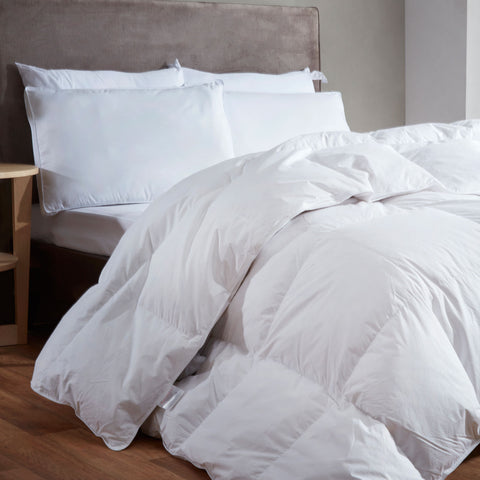
Feather and down filled duvets tend to be heavier than synthetic-filled duvets, particularly those with a higher feather content. These duvets have great thermal properties and are naturally breathable, so are often preferred by those who feel the cold and like to create a tucked up feeling at night. 

Whatever filling and tog you choose we have duvets to suit your preference. If you're investing in a new duvet why not treat yourself to some new pillows as well to achieve the amazing sleep you deserve. 

Choosing tog for different types of sleeper

Tog recommendations assume an "average" sleeper, but very few people are exactly average. Here's how to adjust:

Hot sleepers. If you regularly wake up too warm, go one tier lower than the seasonal guide suggests, and lean towards synthetic fillings, which tend to be more breathable than down at the same tog rating.

Cold sleepers. If you feel the cold easily, go one tier higher, and consider a feather or down fill, which traps warmth more effectively gram for gram than standard synthetic fills.

Couples with different temperature needs. The simplest fix is two single duvets at different tog ratings on one double or king bed, rather than compromising on a single duvet that's wrong for one of you.

Children. Adults choose a tog rating based on personal preference, but younger children require specialised children's bedding with specific tog ratings depending on their age, generally lower than an adult would use in the same room. Our kids bedding and nursery bedding ranges are designed with this in mind. As with any bedding for infants and toddlers, follow current safety guidance on duvet use for under-12-months, where a duvet isn't recommended at all.

Is a higher tog always warmer?

Not necessarily. Tog is a useful, standardised comparison point, but how warm a duvet feels also depends on:

  • Fill type. As covered above, down and down-alternative fills tend to feel warmer than synthetic microfibre at the same tog rating, because they trap air more efficiently.
  • Breathability. A natural-fibre cover regulates temperature better than a synthetic one, which can make a duvet feel warmer or cooler than its tog rating alone suggests.
  • Your mattress, bedding layers, and room temperature. Tog only measures the duvet itself, not your whole sleep environment.

If you're choosing between two duvets with the same tog rating, the fill, and cover material are worth comparing too, not just the number on the label.

Frequently asked questions

What tog duvet is best for summer? Most people are comfortable with a 4.5 to 7.5 tog duvet in summer. Hot sleepers or those in warmer homes should decide the lower end of that range.

What tog duvet is best for winter? A 12 to 13.5 tog duvet suits most UK homes in winter. Colder or less well-insulated bedrooms may need 13.5 to 15 tog.

What tog should I pick for a child's duvet? Children's duvets are typically lower tog than adult ones, usually in the 4.5 to 9 tog range, depending on age and room temperature. Duvets aren't recommended for babies under 12 months.

What is an all-season duvet? An all-season (3-in-1) duvet is two duvets that fasten together, often combining to a 4.5 and 9 tog duvet to make 13.5 tog for winter. They can be used together or separately depending on the season.

Is a higher tog duvet always warmer? Not always. Tog measures insulation, but fill type and breathability also affect how warm a duvet feels, so two duvets with the same tog rating can sleep differently.

Should I choose a natural or synthetic filling? Synthetic fillings are the better choice if you're prone to allergies, as they're non-allergenic by design and easy to launder. Feather and down fillings are naturally breathable and offer excellent warmth, making them popular with those who feel the cold.


Whatever filling and tog you decide, we have duvets to suit your preference. If you're investing in a new duvet, why not treat yourself to some new pillows as well to achieve the amazing sleep you deserve? Find out how to choose the perfect pillow here.

This guide is put together by our bedding team, who work directly with the duvets, fillings, and tog ratings we stock day to day. If you're still unsure which tog is right for your bedroom, our customer service team is happy to help you find the right one for you!.

Back to blog

Leave a comment

Please note, comments need to be approved before they are published.